



Request a FREE ARBICO Organics Catalog   more details » Bookmark and Share
ARBICO Organics
  Shopping Cart: 0 items $0.00
Ask Dr. Buglady

Sign up for Specials

Sqash Vine Borer

Lepidoptera – Borer Moths

Lepidoptera is a large order that contains both butterflies and moths. Certain moths are classified as pest borers due to their larval activity. They are in the families Pyralid or Sesiid. The Pyralid includes the cornstalk borers, carpenterworm and American plum borer, to name a few. The Sesiid, also called clear-winged moths, include the peach tree borers, the squash vine borers, as well as grape root borers.

All the Lepidoptera have the same general life cycle: the adult female moth deposits eggs on the plant the larvae will feed on; the larvae eat until they pupate; and the adult hatches from the pupae.

In the Pyralid, the moths lay their eggs on host plants, or on nearby similar plants, and when the larvae emerge they begin to feed. Depending on the species, they may travel from one plant to another as they develop. Some corn borers start in grasses near a field, and move to the nearby corn. Depending on the species and climate, there may be 1-3 generations a year. The larvae fall to the ground to pupate if there are several generations a year; if there is one generation a year or if it is the last generation, the larvae will hibernate without pupating and complete their cycle the next year in the spring.

In the Sesiid, the moths only lay their eggs on host plants. Wood boring Sesiid, including the peach tree borers, deposit their eggs where a tree has some damage with sap seepage. The emerging larvae immediately enter the tree there and do damage. The larvae generally pupate under the bark. There may be one or two generations a year. Other Sesiid moths deposit their eggs on the plant the larvae will enter. When the larvae emerge, they will enter the part of the plant that is the food – in the case of the squash vine borer, the stem; in the case of the grape root borer, the larvae will drop to the ground, burrow, and begin to feed. Both of these borers pupate in the soil. They typically have two generations a year.

Control Moth Borers

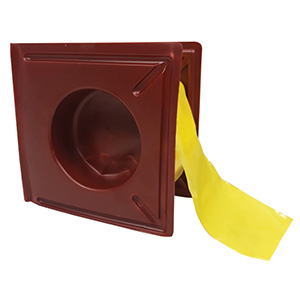
  • Monitor for these with Pheromone Traps designed for your specific borer. That way you will know when egg-laying is happening, and can estimate potential larval development.

  • Trichogramma (moth egg parasites), Green Lacewing, Praying Mantids, and Ladybugs can be used to destroy the eggs that are deposited on the leaves.

  • NemaSeek™ Beneficial Nematodes will effectively kill over-wintering larvae in the early fall, or in the case of 2-generation borers, in mid-summer (apply when they pupate).

  • To avoid peach tree borer problems, monitor in the early fall for possible damage at the base of the tree; if any signs are found, treat with beneficial nematodes (NemAttack™ Steinernema feltiae) to control the larvae.

  • To avoid lesser peach tree borer problems, monitor for the adults; then monitor the trees for damage and signs of borer entrance. Success has been noted using Beneficial Nematodes (NemAttack™ Steinernema carpocapsae and Steinernema feltiae) to control the larvae, though measures to maintain moisture through the canopy are recommended for best results.

  • Apply Entrust as directed to control the European corn borer.

  • Bonide Thuricide may be applied to control the larval stage of Lepidopteran borers.

View Borer Control Products.

Recently Viewed